
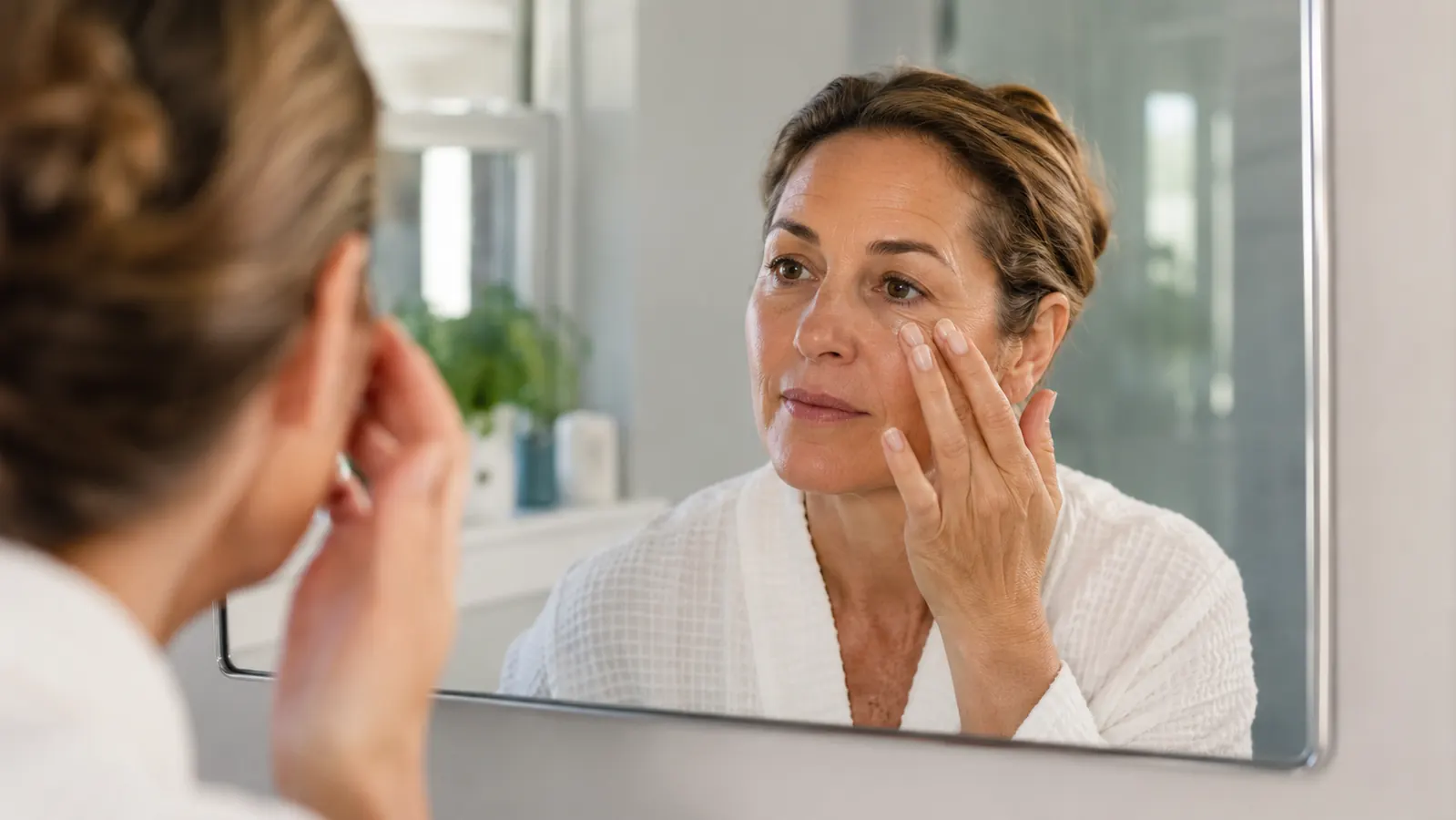
I ran a salon in Peachtree City, Georgia for 25 years, and puffy eyes came up in my chair more than almost any other complaint from women past 45. Not fine lines. Not sunspots. The soft, swollen pouches under the eyes that made a client look worn out in every photo, even on a morning she had genuinely slept eight hours. For years I handed out expensive department store eye creams without much of a plan behind them, and the results were hit or miss at best. About six years ago I got serious about testing an actual routine instead of just guessing, and the product that finally moved the needle on both my own puffiness and my dark circles was RoC Retinol Correxion Under Eye Cream.
Puffy eyes come from a mix of causes, overnight fluid retention, thinning skin that lets the blood vessels and fat pads underneath show through more, salt, allergies, and plain age catching up with collagen. No under eye cream fixes all of that by itself, and I want to say that plainly before you read another word. But used the right way, at the right time of day, in the right amount, a good retinol under eye cream noticeably calms morning puffiness and softens that tired look within a couple months. Here is the exact step by step routine I give every client who has ever asked me the same question I heard at the salon almost every single week.
Tired of Looking Tired? Start With the Cream Built for Puffiness
RoC Retinol Correxion Under Eye Cream is formulated specifically for dark circles and puffiness, not just general dryness. Check today's price and current availability on Amazon before you start the routine below.
Amazon Check Today's Price on Amazon →Step 1: Start with a clean, cool face
Before any cream goes near your eyes, splash your face with cool, not hot, water and pat it dry with a soft towel instead of rubbing. Hot water dilates blood vessels and can actually make morning puffiness look worse in the first few minutes after you wake up, which is exactly the opposite of what you want if you are trying to catch a flight or make an 8am meeting looking rested. Cool water has a mild constricting effect on the surface vessels around the eyes, which takes a little of the swelling down before you have even applied a single product.
Do this step both morning and night, not just once a day. At night it removes the day's makeup and grime so the under eye cream can actually absorb instead of sitting on top of leftover residue. In the morning it is the quickest reset for the puffiness that builds up while you sleep on your side or face down, which is more common than people realize and makes a real difference in which eye tends to look puffier by the time you check the mirror.
I keep a small stack of washcloths in the bathroom just for this step, one for the water, a dry one for patting, because reusing a towel that has been drying your whole face all week is a quiet way to reintroduce bacteria and residue right next to the thinnest skin you have. It sounds fussy until you have watched, like I have, a client's morning puffiness improve simply from cleaning up this one habit before she ever touched her eye cream.
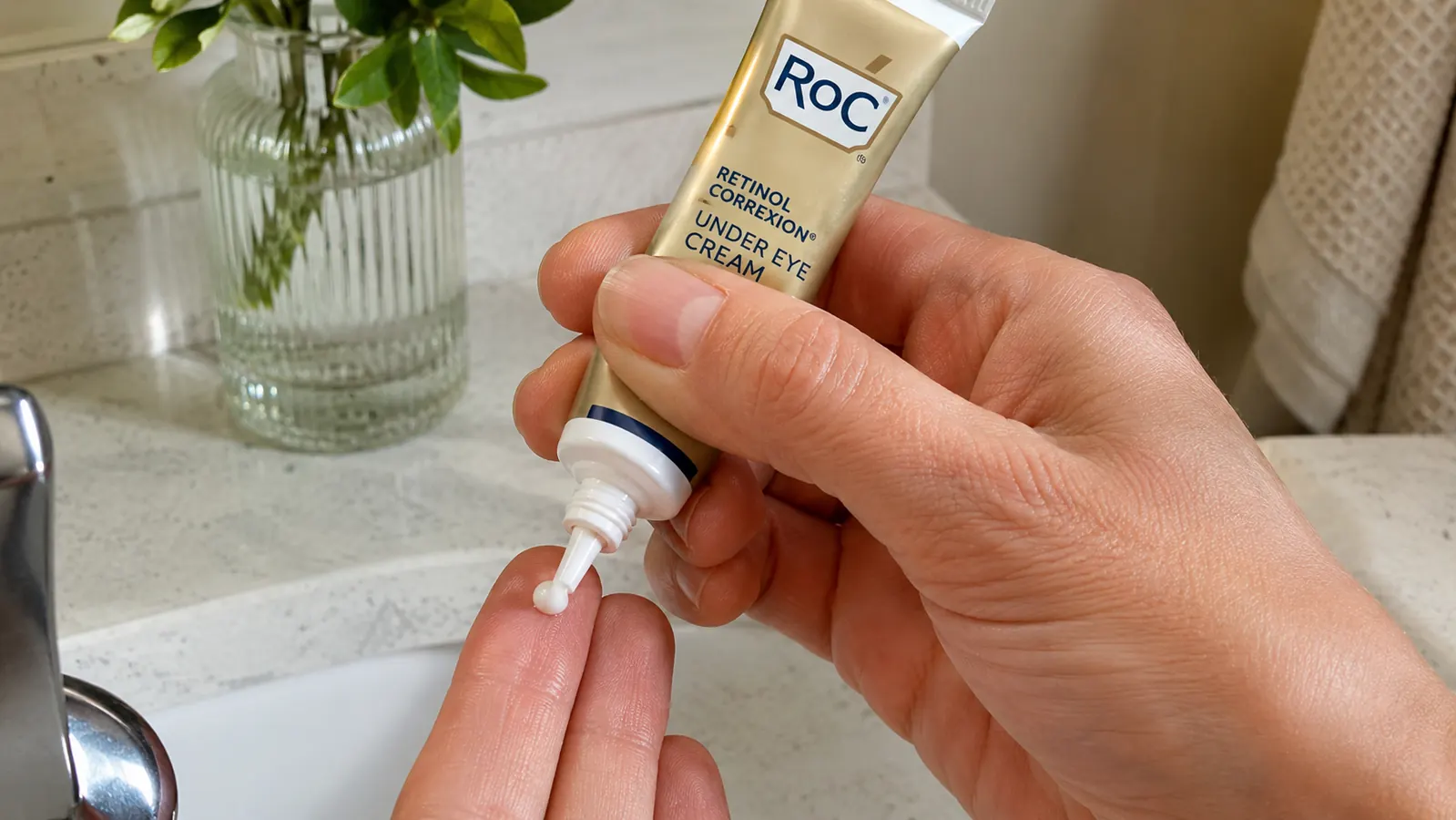
Step 2: Apply a rice grain amount with your ring finger
A little RoC Retinol Correxion Under Eye Cream goes further than most people expect. A rice grain sized dot under each eye is the actual dose, not a full pump or a thick dab like you might use on your cheeks. Use your ring finger specifically, it applies the least pressure of any finger, which matters because the skin under your eyes is thinner than anywhere else on your face and does not respond well to being tugged or dragged.
Pat, do not rub, along the orbital bone starting at the inner corner and moving out toward your temple. Stay clear of the lash line itself and avoid getting too close to the tear duct, where the product is more likely to migrate into your eyes and cause stinging. Let it fully absorb, usually a minute or two, before you layer on concealer, sunscreen, or anything else. Rushing this step is the single most common reason people tell me an under eye cream feels greasy or pills under makeup, when the real issue is impatience, not the product.
I have watched more than one client accidentally undercut her own results by dragging the cream in one long swipe from the inner corner to the outer corner with her index finger, the same motion she uses for her whole face. That single habit stretches delicate skin over years of repetition. Switching to small, gentle pats with the ring finger takes about a week to feel natural, and it is worth the awkward first few tries.
Step 3: Use it morning and night, not just when you remember
Retinol works on a cumulative timeline, which means the results come from consistency, not from one heavy application before a big event. I tell clients to expect a mild tingling sensation the first week or two, sometimes a touch of dryness near the inner corners, and to stick with it rather than stopping at the first sign of adjustment. If the skin under your eyes is especially sensitive, ease in with every other night for the first two weeks before moving to nightly use, the same ramp up approach dermatologists recommend for any retinol near the eye area.
My friend Janice almost gave up on her jar after four days because of a little tingling, and I talked her through waiting one more week before deciding anything. By day twelve the tingling was gone entirely and she was applying it nightly without a second thought. That pattern is normal, and it is exactly why judging any retinol under eye cream after less than two weeks tells you almost nothing useful about whether it actually works for you.
Set a specific anchor point for the habit instead of relying on memory alone. I apply mine right after I brush my teeth, morning and night, so it rides along with something I already do without thinking. Clients who tie their under eye cream to an existing habit, coffee, teeth brushing, taking out contacts, stick with it far longer than the ones who try to remember it as its own separate task floating in the middle of a busy routine.

Step 4: Add a cold compress for morning puffiness spikes
On mornings when puffiness is worse than usual, a salty dinner the night before, a rough night of sleep, allergy season, layer in a quick cold compress before your cream goes on. Two chilled metal spoons pressed gently under each eye for about a minute constrict the surface vessels and pull down visible swelling fast, long before any cream has time to work. A cold gel eye mask kept in the fridge does the same job with less hassle if you want something you do not have to wash after every use.
I actually keep my jar of RoC's under eye cream in the refrigerator door, which adds a small cooling effect right at the moment of application on top of whatever active ingredients are doing the real long-term work. It is a small trick, but on the mornings puffiness is at its worst, that extra bit of cold makes the difference between looking presentable by the time you leave the house and reaching for concealer you would rather not need.
Give the compress a full sixty seconds per eye, not a quick five second touch. Most people rush this part because it feels uncomfortable, and then wonder why it did not seem to do much. A proper full minute, repeated on a second pass if the puffiness is stubborn that day, is what actually gets the visible reduction people are hoping for before they even open their under eye cream.
Step 5: Give it 8 to 12 weeks and track what you actually see
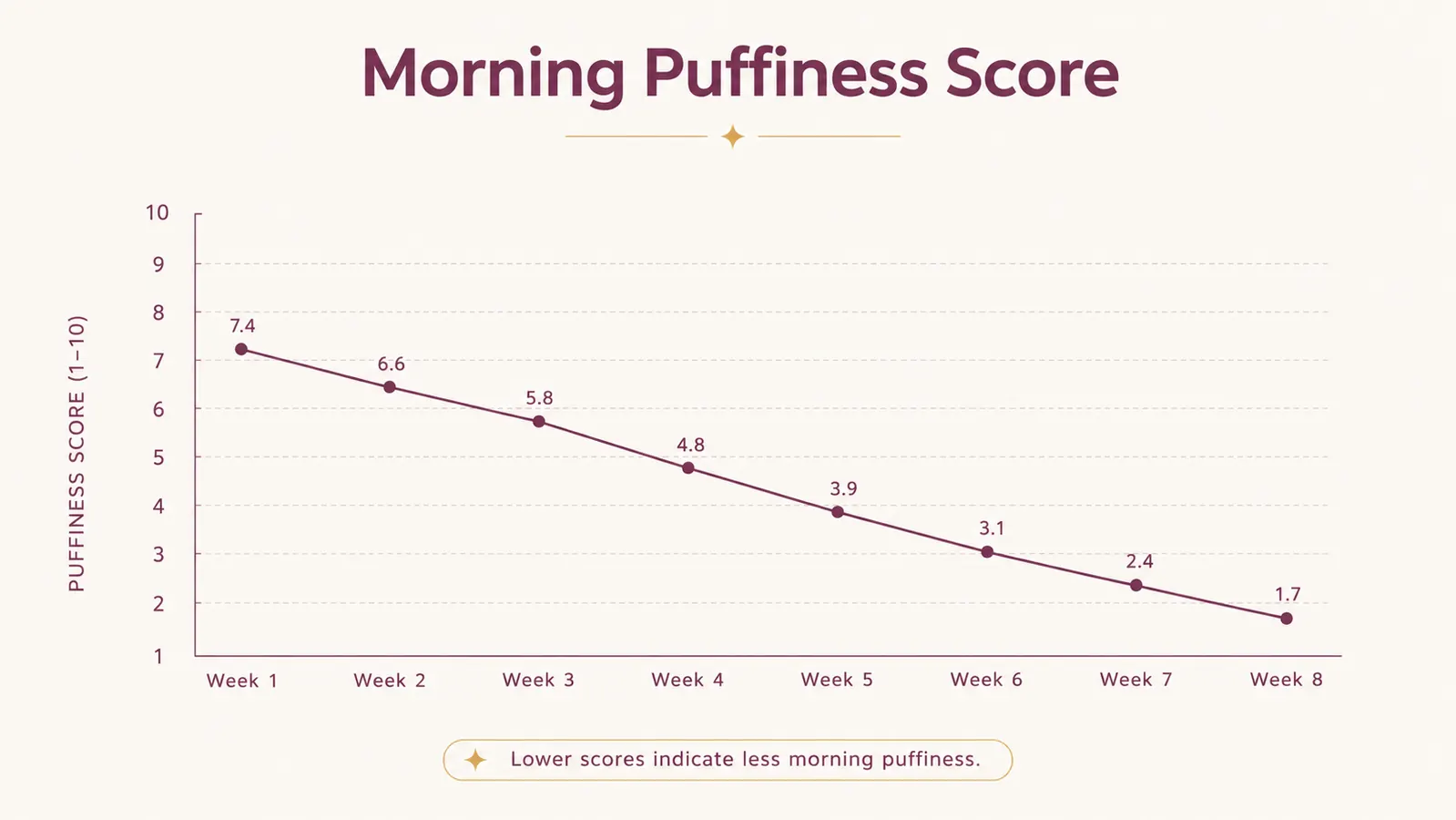
Retinol needs time to build collagen and improve circulation under the skin, and that is not a two week project no matter how good the formula is. Take a photo in the same bathroom light once a week, ideally right after you wake up, since that is when puffiness shows most honestly. Most people, myself included, do not notice much difference for the first three to four weeks, then start seeing a real, visible softening of both morning puffiness and the tired, shadowed look under the eyes somewhere between week six and week twelve.
Be honest with yourself about what this routine will and will not do. It will not erase deep under eye hollows caused by volume loss, and it will not undo a genuinely bad night of sleep by itself. What it does is reduce how dramatically your eyes swell overnight and how quickly that swelling shows up on an average morning, which for most people is the actual problem they are trying to solve when they say their eyes look puffy. Give the full stretch of weeks a fair shot before deciding whether it is working, the same way I ask every client at the salon to wait before judging any skincare change.
Keep your weekly photos in one folder on your phone so you can actually flip back and compare week one to week eight side by side, rather than relying on memory, which tends to smooth over gradual change until it feels like nothing ever happened. That side by side comparison is usually the moment a skeptical client finally believes the under eye cream is doing something, because the difference is right there in two photos taken a season apart.
What Else Helps
The cream does the heavy lifting, but a few habits around it make the results show up faster and last longer. Sleeping with your head slightly elevated on an extra pillow keeps fluid from pooling around your eyes overnight the way it does when you sleep flat. Cutting back on salt and alcohol the night before an early morning matters more than most people want to admit, both pull water into the tissue under your eyes while you sleep. If allergies are part of your puffiness, an antihistamine before bed during high pollen weeks can take a surprising amount of swelling off the table before your under eye cream even has a chance to work.
A mineral sunscreen every morning around the eye area also protects the thin skin that retinol has just made more sun sensitive, which keeps your progress from getting undone by the next sunny afternoon. Staying hydrated through the day helps too, though it is a smaller lever than people assume, dehydration shows up as dullness more than puffiness specifically. And if your puffiness is dramatically worse on one side, or shows up alongside swelling somewhere else on your body, that is worth a conversation with a doctor rather than another skincare tweak. Most morning puffiness is ordinary and cosmetic. It is worth knowing the difference before you assume an under eye cream alone should be handling more than it reasonably can.
Puffy eyes are rarely about one bad night of sleep. They are about a routine you do every single day, or one you keep putting off.
Start Tonight, Not the Next Time You Have an Early Morning
Grab the same RoC Retinol Correxion Under Eye Cream I walk clients through above and follow the five steps starting with tonight's routine. Check today's price and current availability on Amazon.
Amazon Check Today's Price on Amazon →