

I turned 52 in March, and if you want the honest truth, my first thought looking in the mirror that week wasn't about candles. It was about the two vertical lines between my eyebrows that had gone from only showing up when I frowned to looking like permanent residents. I ran a salon in Peachtree City, Georgia for almost 25 years, so I've heard every retinol horror story and every retinol success story a client could tell me across the chair. I decided to give myself the same trial period I always told clients a retinol needs, four straight months, no skipping, no quitting at week two out of frustration. I reached for Neutrogena Rapid Wrinkle Repair, the retinol and hyaluronic acid cream, because it was the one I used to point clients toward when they weren't ready to ask their doctor for a prescription.
I started on a Tuesday night in late November, dabbing a pea sized amount of Neutrogena's cream onto clean, dry skin before bed, exactly the way the box tells you to. My husband Wayne asked why I suddenly smelled faintly like a drugstore aisle every night at nine. Four months, 122 nights, and one fully emptied jar later, I have real answers about what this Neutrogena retinol did to my skin, what it didn't do, and the two rough weeks in the middle where I nearly gave up on it.
The Quick Verdict
A genuinely effective drugstore retinol that softened fine lines and evened out my tone over four months of nightly use, though the early adjustment redness was rougher than the packaging lets on.
Amazon Check Today's Price →Stop paying for a dermatologist visit just to find out if retinol even works on your skin.
Neutrogena Rapid Wrinkle Repair is the retinol and hyaluronic acid cream I used every single night for four months before I wrote a word of this review. See today's price and current availability on Amazon.
Amazon Check Today's Price on Amazon →How I've Used It
My routine with Neutrogena Rapid Wrinkle Repair was deliberately boring, because boring is what actually works with retinol. I didn't jump straight to nightly use. I applied it every third night for the first two weeks, then every other night through week four, then nightly starting week five, which is the exact ramp up schedule my dermatologist, Dr. Okafor, told my old salon clients to follow with any retinol strength, prescription or over the counter. Skip that ramp up and your skin will let you know it, loudly, within days.
After cleansing, I let my skin dry fully, patted a pea sized dot of Neutrogena's cream across my forehead, cheeks, and chin, and worked outward toward my hairline and jaw. Every single morning after a Neutrogena night, I wore mineral sunscreen without fail, because retinol thins the outer layer of skin and makes it noticeably more sun reactive, something I preached at my own consultation table for two decades before I ever used it on myself daily. My granddaughter Presley started calling it Nana's nighttime medicine, which honestly isn't far off.
Consistency mattered more than any single product claim. Out of 122 nights, I only missed the Neutrogena cream a handful of times, twice while traveling to visit my sister Denise and once during a stomach bug when skincare was the last thing on my mind. I also tracked which nights I layered a plain moisturizer over the retinol versus applying it alone, because buffering turned out to matter enormously for how my skin tolerated Neutrogena's formula during the first month.
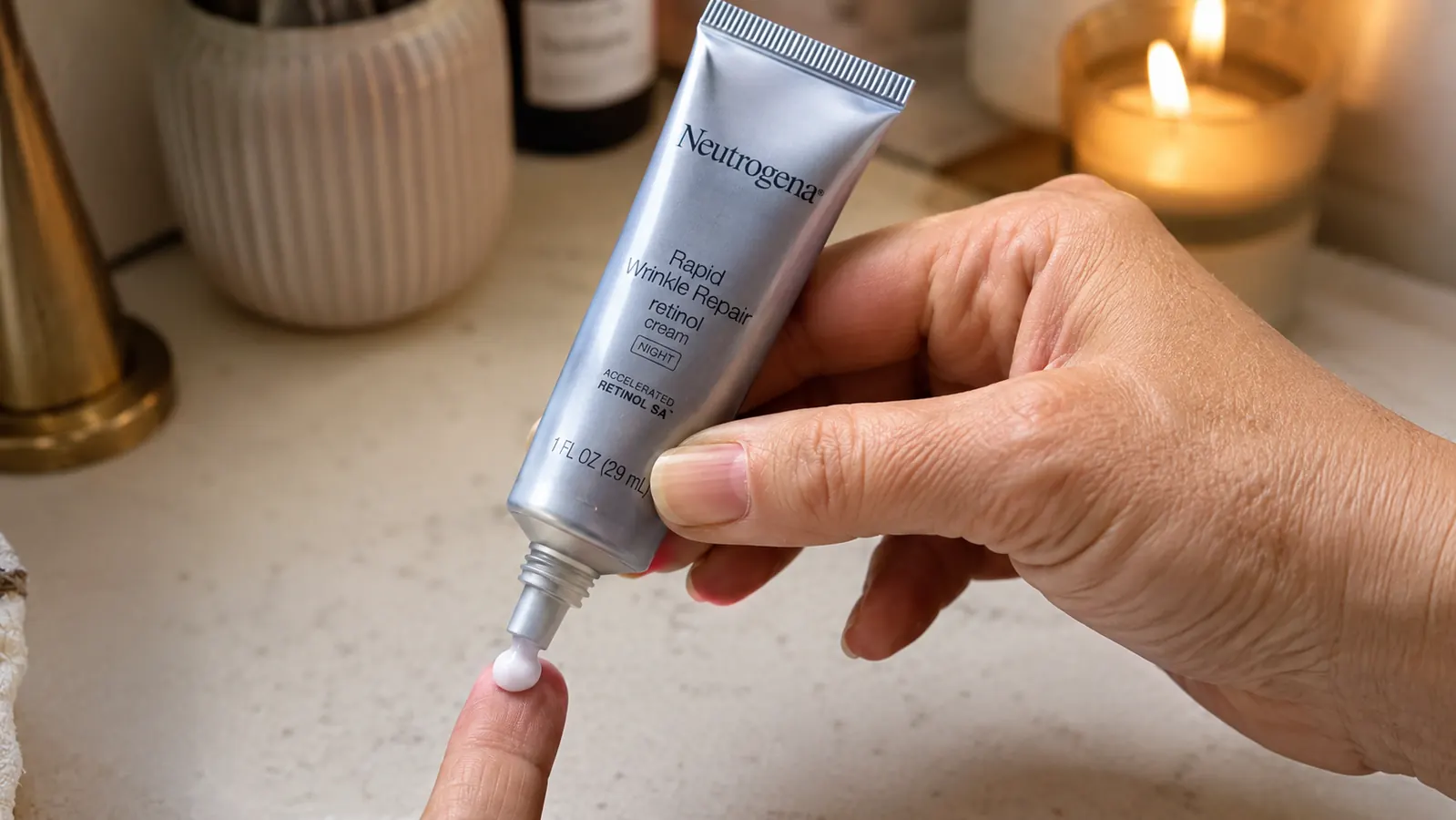
The Retinol and Hyaluronic Acid Pairing, and Why It Matters
Neutrogena built Rapid Wrinkle Repair around a stabilized retinol, paired directly with hyaluronic acid in the same formula, which is a smarter combination than it might sound. Retinol on its own can leave mature skin dry and flaky within days, the kind of flaking my old clients used to describe as looking like they'd aged five years overnight instead of turning back the clock. Hyaluronic acid pulls moisture into the skin at the same time the retinol is doing its resurfacing work, which softened that trade-off for me considerably compared to the plain retinol serums I'd sampled at the salon over the years.
This is not the same strength as the tretinoin Dr. Okafor once prescribed me years ago for a stubborn patch of melasma. Neutrogena's over the counter retinol works more gradually, which meant slower results but also a gentler entry point for someone like me who wasn't willing to sit through the aggressive peeling that prescription strength retinoids can cause in the first month. If you've been scared off retinol entirely because of a bad prescription experience, Neutrogena's formula is a real middle ground worth trying before you write off the ingredient altogether.
I also appreciated that Neutrogena kept the ingredient list relatively simple. No added fragrance that I could detect, no heavy essential oils that tend to irritate my rosacea-prone cheeks and jawline. On nights when my skin was already a little reactive from weather or stress, the Neutrogena formula never once caused the stinging burn I've felt from fragranced anti-aging creams in the past, which told me the hyaluronic acid was pulling its weight.
Four Months of Nightly Use: What Actually Changed
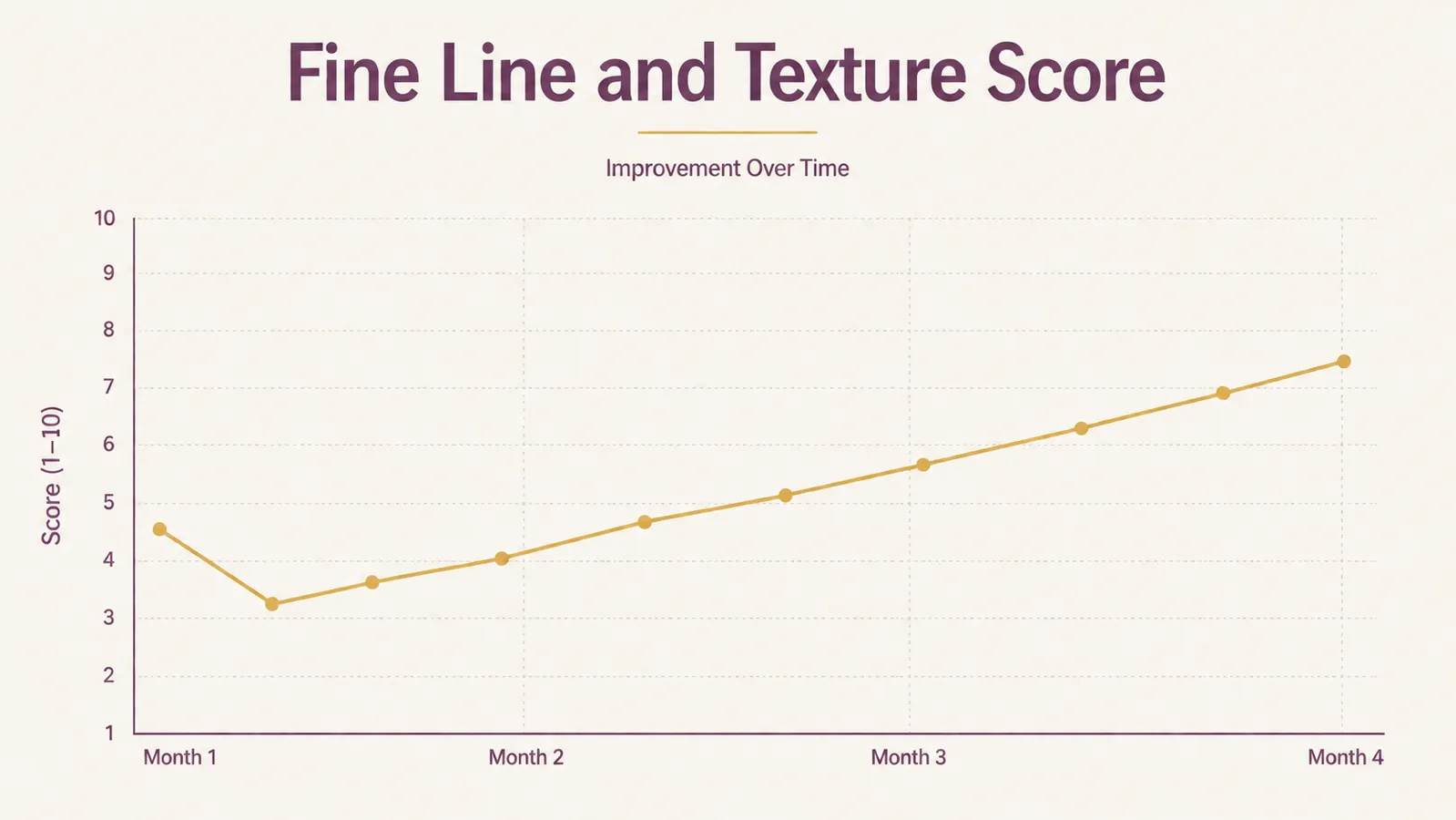
By week three, the flaking had mostly settled and I started noticing something small but real, the fine lines around my mouth looked less etched by mid-morning, the way they used to deepen the second I applied any powder foundation. By week six, the two vertical lines between my eyebrows that started this whole four month experiment were visibly softer, not gone, but softer, especially in natural daylight rather than harsh bathroom lighting.
Month two is when Wayne noticed something without me pointing it out first, which almost never happens. He said my skin looked less tired around my eyes, even on nights I'd gotten five hours of sleep chasing Presley around. I credit that to the combination of consistent hyaluronic acid hydration and whatever the Neutrogena retinol was doing underneath the surface, because I hadn't changed anything else in my routine, not my sunscreen, not my diet, nothing.
By month three and four, the biggest change was texture rather than any single wrinkle disappearing. My skin felt smoother under my fingertips, almost the way it did in my late thirties, and a few faint sun spots along my cheekbones had genuinely lightened. Dr. Okafor confirmed at my spring skin check that my overall texture had improved and told me to keep using the Neutrogena cream exactly as I had been, which felt like real validation after four months of nightly discipline.
The Redness, Peeling, and Purging Nobody Warns You About
I'm not going to pretend the first three weeks were comfortable, because they weren't, and any review that skips this part isn't being straight with you. Around day nine, I woke up with visible flaking around my nose and the corners of my mouth, along with a low grade redness across both cheeks that made me look sunburned in photos. This is the classic retinol adjustment period, sometimes called retinization, and Neutrogena's formula is no exception to it just because it's sold over the counter without a prescription.
What got me through it was buffering, applying a plain, fragrance-free moisturizer first and letting it sink in for a few minutes before patting on the Neutrogena retinol cream over top. That single change cut the flaking noticeably within a week, without meaningfully slowing down my results. I also dropped down to every third night again for about five days when the redness peaked, then worked my way back up to nightly use once my skin calmed down, rather than pushing through and risking a full-blown reaction.
There was also a short purging phase around week three, two small breakouts along my jawline that I hadn't dealt with since my forties. Dr. Okafor told me this is normal as retinol speeds up cell turnover and pushes existing congestion to the surface faster, and it cleared within ten days on its own. If you're using Neutrogena's Rapid Wrinkle Repair and hit a rough patch of redness or a surprise breakout in the first month, that's not necessarily a sign to quit, it's often a sign it's working.
What I Compared It To
Before committing fully to Neutrogena, I pulled out a jar of a much pricier department store retinol serum I'd bought on a whim two years earlier and used it alongside the Neutrogena cream on alternating nights for about three weeks, just to compare tolerance and feel. The pricier serum felt silkier going on, but it caused more redness on my cheeks than Neutrogena did, and it offered no meaningful advantage in results that I could see or feel over that same stretch of time.
I also thought back to the prescription tretinoin Dr. Okafor gave me years ago for melasma. That prescription formula worked faster, but the peeling was significantly more aggressive, and I remember hiding indoors for a solid week the first time I used it. Neutrogena's over the counter version traded some of that speed for a far gentler adjustment period, which suited my actual daily life a lot better, since I don't have the luxury of disappearing from the world for a week every time I try a new skincare step.
My friend Janice tried a completely different drugstore retinol cream during the same four months, one without any hyaluronic acid built in, and texted me constantly about how dry and tight her skin felt by week two. She eventually switched to Neutrogena's formula on my recommendation and told me within ten days that the difference in comfort was noticeable, which matched exactly what I'd found comparing the two side by side in my own bathroom.
What I Liked
- Stabilized retinol paired with hyaluronic acid softens the classic dryness trade-off
- Gentler adjustment period than prescription strength tretinoin
- Visible improvement in fine lines and texture by month two to three
- No added fragrance that triggered my rosacea-prone skin
- Priced low enough to run a full four month trial without hesitation
Where It Falls Short
- First two to three weeks brought real flaking, redness, and a short purging phase
- Slower, gentler results than prescription strength retinoids
- Requires nightly consistency for months before changes are obvious
- Small 1.7 oz jar means reordering every couple of months with nightly use
That's not necessarily a sign to quit. It's often a sign it's working.

Who This Is For
If you're over 40, starting to notice fine lines settling into permanent creases rather than just showing up when you frown, and you're not ready to book a dermatologist appointment for a prescription retinoid, Neutrogena Rapid Wrinkle Repair is worth a genuine four month trial. It's also a solid fit if you've tried retinol before and quit during the flaking stage, because pairing it with a buffering moisturizer the way I did makes that adjustment period far more livable. Four months in, this Neutrogena jar has a permanent spot on my nightstand, not shoved in a drawer, and it's what I now tell my old salon clients to buy first.
It's also a smart starting point if cost matters to you while you figure out whether retinol as an ingredient even agrees with your skin, before spending significantly more on a prescription copay or a specialty serum that may irritate you in exactly the same way.
Who Should Skip It
If you have very deep, established wrinkles and you're looking for dramatic, fast change, Neutrogena's over the counter strength likely won't move fast enough for you, and a conversation with a dermatologist about prescription tretinoin may serve you better. If your skin is already extremely reactive or you're currently dealing with an active flare of rosacea or eczema, wait until your skin has calmed down before starting any retinol, Neutrogena's included, since the adjustment period will only add fuel to an already irritated face. For everyday fine lines and early texture changes on normal to dry, mature skin, though, it's hard to beat what Neutrogena put into this jar.
My eyebrow lines softened in four months. Yours can start tonight.
Grab the same Neutrogena Rapid Wrinkle Repair retinol cream I used for 122 straight nights and see current pricing on Amazon.
Amazon Check Today's Price on Amazon →