

If you've stood in the skincare aisle and quietly put a tube of Neutrogena Rapid Wrinkle Repair back on the shelf because you were scared of turning your face into a peeling, red mess, I want you to know something. That fear is smart, not silly. Retinol is genuinely the most effective over the counter ingredient for softening fine lines, smoothing texture, and fading the dullness that creeps in after 40. It's also the ingredient most likely to make a beginner quit in week one if she starts it wrong. There's a right way to bring retinol into your routine, and it has almost nothing to do with willpower.
I ran a salon in Peachtree City, Georgia for almost 25 years, and I watched this exact scene play out more times than I can count. A woman in her late 40s or 50s buys a retinol cream with the best intentions, applies it every single night like it's a regular moisturizer, wakes up three days later looking sunburned and flaky around her nose and mouth, and shoves the tube to the back of a drawer. She decides retinol just isn't for her skin. It almost always was for her skin. She just started at a sprint when her skin needed a slow, deliberate crawl. That's the whole secret, and it's the entire point of this guide.
Before You Start, Use the Cream Built for a Slow Start
Neutrogena Rapid Wrinkle Repair pairs retinol with hyaluronic acid, so it hydrates while it works instead of stripping your skin bare. That combination is exactly why the step by step method below holds up so well with this particular cream, even on skin that has never touched retinol before.
Amazon Check Today's Price on Amazon →Step 1: Start With Two Nights a Week, Not Seven
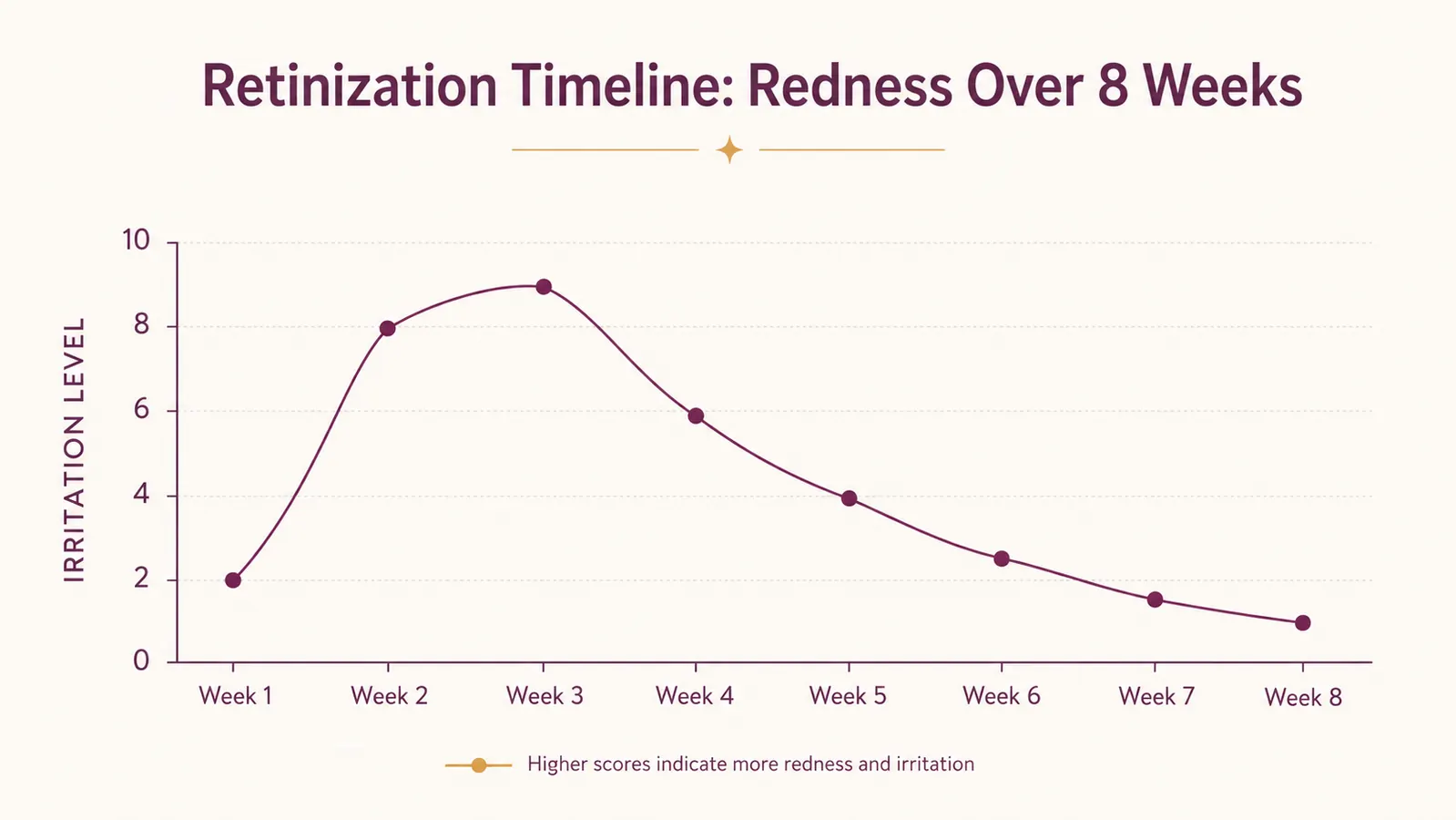
The single biggest mistake I saw in my chair for 25 years was women treating retinol like a nightly moisturizer from day one. Don't do that. For the first two weeks, apply your Neutrogena Rapid Wrinkle Repair only twice, on nights that aren't back to back, say a Monday and a Thursday. Your skin needs time between applications to build tolerance to the ingredient before it sees another dose. This isn't caution for the sake of it. Retinol works by speeding up cell turnover, and skin that hasn't built tolerance yet will answer that speed with redness, tightness, and flaking that has nothing to do with the cream failing you.
Once those first two weeks pass without more than mild, temporary dryness, move to three nights a week for weeks three and four, then four nights for weeks five and six. Only around week seven or eight should you be applying it nightly, and even then, plenty of women over 40 do beautifully on five nights a week forever and never need to go higher. I had a client named Carol, 58, who tried nightly retinol twice on her own and quit both times within a week. The third time, she followed this exact schedule and made it to month three without a single flare up.
I like pairing retinol nights with something else memorable, like trash night or a standing phone call with my sister Denise, so I don't have to rely on memory alone during the first few confusing weeks. Write your two nights on a sticky note on the bathroom mirror if you need to. The schedule only works if you actually follow it, and a strict two nights a week beats an inconsistent five nights a week every time when you're brand new to retinol.
Step 2: Apply to Completely Dry Skin, Not Damp Skin
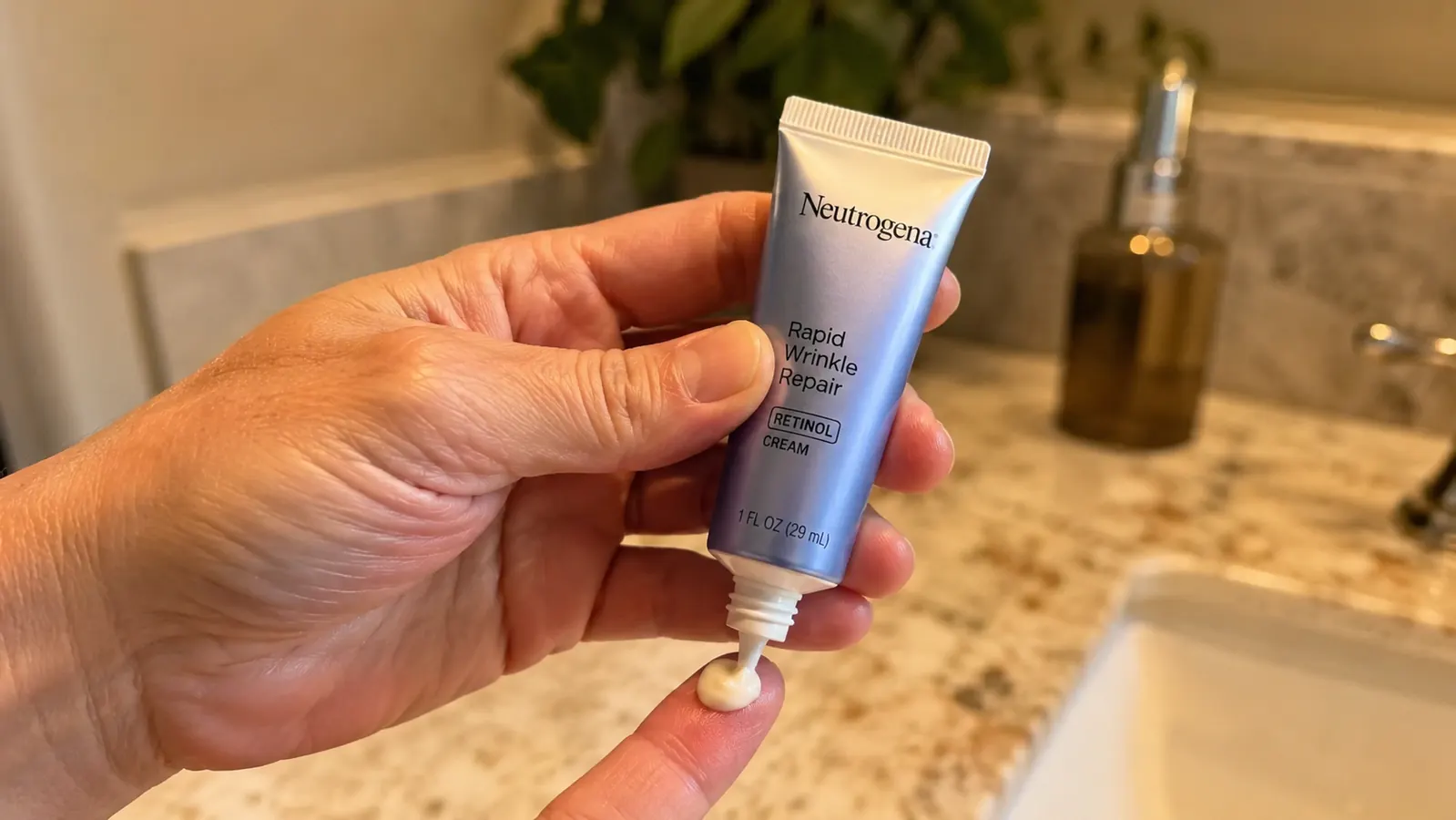
Wait a full 20 to 30 minutes after washing your face before you apply retinol. Damp skin absorbs actives faster and deeper, which sounds like a good thing until you realize it also means faster, deeper irritation. Pat your face fully dry, let it sit, then apply. A pea sized amount is enough to cover your entire face. More cream doesn't mean more results. It just means more product sitting on skin that can't process it yet, which is where the redness and peeling actually come from.
Warm the cream on your fingertip first, then dot it on your forehead, both cheeks, chin, and the bridge of your nose before smoothing outward. Skip the thin, sensitive skin directly around your eyes and the corners of your nose and mouth for at least the first month. Those areas have fewer oil glands and irritate faster than the rest of your face. You can work retinol closer to those zones later, once your skin has proven it can handle the cream everywhere else without complaint.
Apply your retinol as the very last step of your nighttime routine, after any toner but before nothing else. Don't layer a heavier night cream directly over it unless you're using the buffering method in Step 3, since a thick moisturizer on top can trap the retinol against your skin and intensify irritation rather than easing it. Simple is better here. Cleanser, dry skin, retinol, done.
Step 3: Use the Sandwich Method if Your Skin Runs Sensitive
If you have rosacea, eczema, or skin that's reacted to nearly everything you've tried, buffer your retinol between two layers of a gentle, fragrance free moisturizer. Apply moisturizer first, wait five minutes, apply your pea sized amount of Neutrogena Rapid Wrinkle Repair, then follow with a second thin layer of moisturizer on top. This sandwich method dilutes how much retinol actually touches your skin barrier at once, without diluting your results away completely. It's the same trick I used behind the chair for clients who wanted retinol's benefits but couldn't tolerate it straight.
You won't need the sandwich method forever. Most women can drop the bottom layer of moisturizer within four to six weeks and eventually apply retinol directly to dry skin like everyone else. Think of it as training wheels, not a permanent workaround. If you're still needing to buffer every single night after two full months, that's a sign to talk to a dermatologist, mine is Dr. Okafor, about whether a different retinol strength or formula is a better match for your particular skin.
I had a client with rosacea so reactive that even fragrance free moisturizer alone left her blotchy some weeks. She used the sandwich method exclusively for four full months before she could tolerate retinol applied directly, and her fine lines still softened noticeably by the end of it. Slower is not the same as not working.

Step 4: Expect Flaking Around Week Two, and Don't Quit
Somewhere around days 10 through 21, most people notice dry, flaky patches, especially around the nose and mouth. This is called retinization, and it's your skin adjusting to faster cell turnover. It is normal, it is temporary, and it is not the same thing as an allergic reaction. Normal retinization looks like dry, papery skin that responds to moisturizer. An actual reaction looks like burning, swelling, hives, or redness that spreads and gets worse instead of better over several days. If you're seeing the second kind, stop use and see a dermatologist. If you're seeing the first kind, keep going.
My friend Janice quit her first retinol attempt during exactly this window, day 13, because she assumed the cream was wrong for her. Two months later she restarted using this slower schedule, hit the same flaky week, recognized it this time, kept applying a rich moisturizer over it, and pushed through. By month three her texture had smoothed out more than it had in the previous five years of just moisturizer and hope. The flaking is a phase, not a verdict on whether retinol works for you.
Don't confuse retinol purging, small breakouts along the jawline or chin in the first few weeks as old congestion pushes to the surface, with a true allergic reaction. Purging clears on its own within one to two weeks and tends to show up as the same kind of breakout you'd normally get, just earlier than expected. A true reaction tends to show up as a different, unfamiliar kind of irritation and keeps getting worse rather than fading. When in doubt, a quick photo sent to your dermatologist settles it faster than guessing on your own.
Step 5: Never Skip Morning Sunscreen
Retinol makes skin measurably more sensitive to sun damage while it's working, which means the single fastest way to undo months of progress is walking out the door bare faced. Every single morning after a retinol night, follow it with a broad spectrum SPF 30 or higher, no exceptions. A mineral sunscreen tends to sit better on skin that's already adjusting to an active ingredient, since it sits on top of the skin rather than absorbing into it the way some chemical formulas do, and it won't fight with whatever your retinol did to your barrier overnight.
Reapply if you're outside for more than two hours, and don't skip it on cloudy days either, since UV rays pass through cloud cover just fine. This one step is what separates women who use retinol for years with real, lasting results from women who use it for a few months and end up with new sun spots to go along with their smoother texture. My granddaughter Presley thinks it's funny that Nana never leaves the house without her face cream, but retinol and sunscreen really are a package deal. One without the other is only doing half the job.
Pair your morning sunscreen with a wide brim hat if you know you'll be outside for a while, gardening, walking, or sitting at Presley's soccer games. The two together do more than either one alone, and it means you're not relying on one bottle of sunscreen to fight the sun by itself for six straight hours.
What Else Helps
A gentle, fragrance free cleanser matters more once you start retinol, since anything with sulfates or heavy exfoliating acids will stack right on top of the irritation retinol already causes. Save vitamin C and exfoliating acids for your morning routine instead of layering them with retinol at night. Two active ingredients fighting for the same patch of skin at the same time is how most irritation actually starts. And give the process real time. Most people notice smoother texture around week six, but the meaningful softening of fine lines usually shows up closer to week 12. Retinol is a long game, not a weekend fix, and I've never once had a client regret waiting it out.
Keep a simple note on your phone, just the date and how your skin looked that morning. It sounds unnecessary until week five, when you'll want proof that you've actually improved since week one and forgotten how red that first week looked. That log is often what keeps people going through the slow middle stretch, right when it would be easiest to quit and tell yourself retinol just isn't for you.
If you want to try a new serum or cleanser while you're also starting retinol, introduce it on its own for two weeks first before combining it with your retinol nights. Trying several new products at once is how most people misdiagnose which one actually caused their irritation, and then quit the wrong one out of confusion.
Retinol rarely fails the slow starters. It only fails the impatient ones.
Start the Slow Way, With the Cream Built to Match It
Neutrogena Rapid Wrinkle Repair was formulated with hyaluronic acid working alongside the retinol, not against your skin barrier, which is exactly why this step by step method holds up so well with it. Give it the 12 weeks it actually needs.
Amazon Check Today's Price on Amazon →